
Introduction
There are books on pop music genres and classical antiquity — partly to sell books, if also in part to sell studies of classical Greek and Latin antiquity at university[1] — in addition to an urge to attend more broadly to musical reception as such.[2]
Not quite a general review of classical influence, which can range from the level of Saturday morning television cartoon programming to gaming — there is (at least) one monograph on science fiction[3] composed in the spirit of the subtitle of one coauthored study: What Have the Greeks and Romans Done for Us? [4] — or else reading poetry (not only in connection with Anne Carson, sometimes lionized by scholars, at times eschewed),[5] just as criticism of Bob Dylan as misogynist, if certainly extant, can be received with horror (say it isn’t so) by a certain coterie, often male.
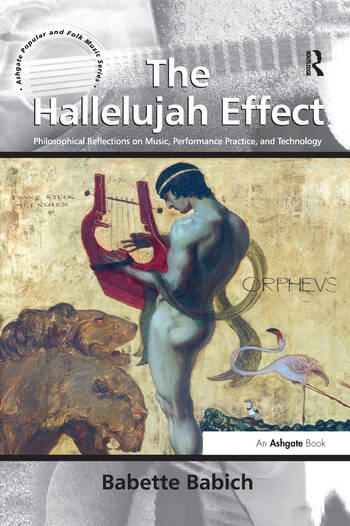
Given that I myself have a relatedly centauric — Nietzsche’s metaphor for ancient philology — study, The Hallelujah Effect,[6] it is hardly my intention to complain.
Nevertheless one cannot but note a certain cognitive/historical dissonance, as Keanu Reeves hit cultural consciousness in Stephen Herek’s 1989 Bill and Ted’s Excellent Adventure, based on the premise of travel time travel, augmented by an English-speaking Socrates (thank you Star Trek but also thanks to Ray Bradbury’s 1950 Martin Chronicles for the conception of not only xenoanthropological studies but that of an advanced and thus universal ‘translator’).
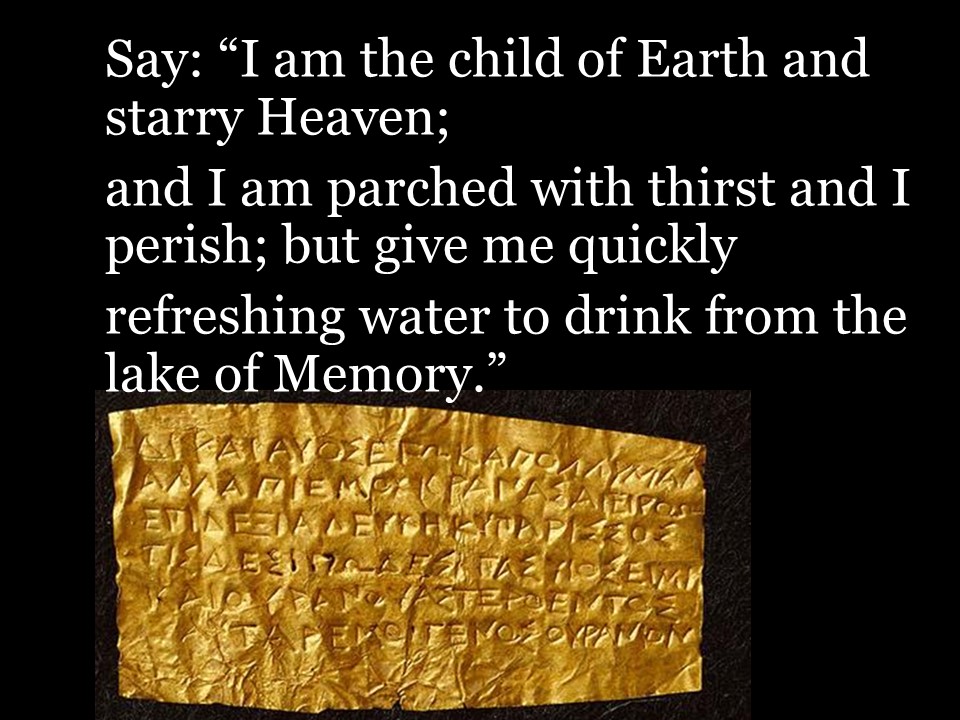
Bradbury’s universal translator relieves many worries, given that as the (relatively) recent discovery of the Derveni Papyrus seems to suggest, compounding older gold tablets as vademecum for the dead, a Totenpass,[7] or passport to hell, as in addition to recommended procedure — avoid the first fountain — there seems a specific script one must pronounce, word for word in the underworld: should it transpire that efficacy might depend on words enunciated, clearly as Nietzsche emphasizes they would have to be — this after all being what he meant by ‘the spirit of music’ — said in Greek. And there we have a chance to get to the cinematic prelife of Bill and Ted on our way to ‘rap’[8] or hip hop relevance.[9]
Notes
[1] K.F.B. Fletcher and Osman Umurhan eds., 2019, Classical Antiquity in Heavy Metal Music (London: Bloomsbury, 2019).
[2] Emily Pillinger and Miranda Stanyon, eds., 2025, Music as Classical Reception (Oxford: Oxford University Press).
[3] Ross Clare 2023, Ancient Greece and Rome in Modern Science Fiction: Amazing Antiquity (Liverpool: Liverpool University Press)..
[4] Gregory Aldrete and Alicia Aldrete 2019, The Long Shadow of Antiquity: What Have the Greeks and Romans Done for Us? (London: Bloomsbury).
[5] T. H. Geller-Goad 2018, „Pop Music and Graeco-Roman Erotic Verse: Teaching Thorny Topoi in Lyric Ancient and Modern,” Classical World: A Quarterly Journal on Antiquity, Vol. 112, No. 1: 649-662.
[6] Babich 2016, The Hallelujah Effect (London: Routledge [2013]) and 2011, “The Birth of kd lang’s Hallelujah out of the ‘Spirit of Music’: Performing Desire and ‘Recording Consciousness’ on Facebook and YouTube,” Perfect Sound Forever. online music magazine–Oct/Nov, http://www.furious.com/perfect/kdlang.html.
[7] See Alberto Bernabé 2002, “Orphisme et Présocratiques.: bilan et perspectives d’un dialogue complexe” in: André Laks and Claire Longuet, eds. Qu’est-ce que la philosophie présocratique. What is presocratic philosophy (Villeneuve d’Asqu: Presses Universitaires du Septentrion), 205-247 and 2013 “Orphics and Pythagoreans: The Greek Perspective” in: Gabriele Cornelli, Richard McKirahan, Constantinos Macris, eds., On Pythagoreanism (Berlin: de Gruyter), 117-151.
[8] See for a discussion of the classics scholar, Brandon Bourgeois, Lance Ignon 2019, “By rapping The Iliad, classics professor makes ancient literature relevant again. Brandon Bourgeois believes that, by translating the entirety of Homer’s The Iliad into rap lyrics, he can help students better appreciate the classic poem.” October 14: Today USC. Online: https://today.usc.edu/brandon-bourgeois-classics-the-iliad-rap/ and Ryan R. Goble and Elizabeth Wiersum. 2019. “Epic Explorations: Teaching the ‘Odyssey’ With The New York Times.” New York Times. March 21.
[9] J.A. Williams 2010, “The Construction of Jazz Rap as High Art in Hiphop Music,” Journal of Musicology, Vol. 27, No. 4: 435-459.
 Babette Babich